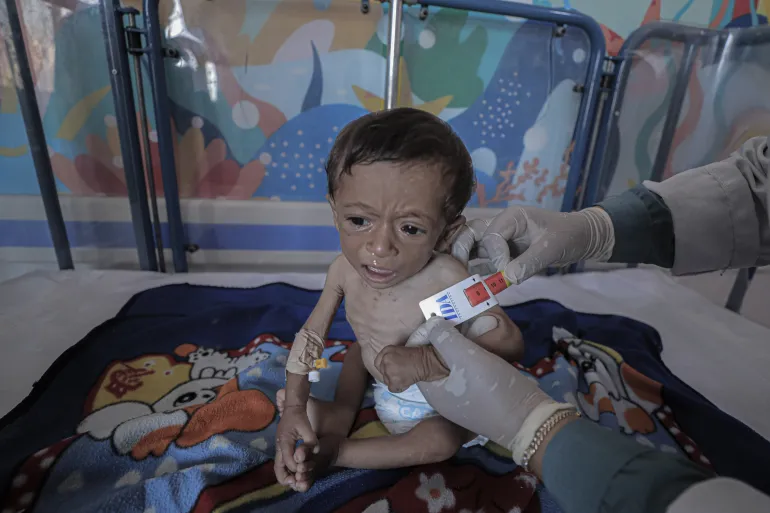
Source: Adapted from Al Jazeera
A devastating famine, driven by a 22-month Israeli blockade, has claimed at least 240 lives in Gaza, including 107 children, according to the Palestinian Health Ministry’s latest figures from August 17, 2025. The blockade’s severe restrictions on food, water, and humanitarian aid have plunged the region into a humanitarian crisis, with malnutrition threatening thousands, particularly infants.
Blockade Fuels Starvation Crisis
From March to mid-May 2025, Israel sealed Gaza’s crossings, halting all deliveries of food, water, and aid. This intensified an already dire situation, leaving Gaza’s 2.3 million residents grappling with acute shortages. Even after partial reopening, aid inflows remain far below the pre-war average of 500 trucks daily, insufficient to sustain the population.
On August 14, 2025, over 100 aid organizations, including Oxfam, Doctors Without Borders, Amnesty International, and the Norwegian Refugee Council, issued a joint statement condemning Israel’s restrictions as a deliberate obstruction of life-saving aid. Relief supplies remain stranded in warehouses in Jordan and Egypt, unable to reach those in need.
Amnesty International, in a separate statement on August 11, accused Israel of enforcing a “deliberate policy” of starvation, describing it as part of “plans and policies… to deliberately inflict on Palestinians in Gaza conditions of life calculated to bring about their physical destruction.” The group labeled the policy a component of Israel’s “ongoing genocide” in the region.
Gaza’s reliance on aid predates the current crisis, with a blockade in place since 2007. Since October 7, 2023, however, aid deliveries have plummeted, exacerbating hunger and dehydration across the territory.
Malnutrition’s Deadly Toll
Starvation’s impact is most severe on children, whose developing bodies are highly vulnerable. Prolonged malnutrition during the critical first 1,000 days of life—from pregnancy to age two—can cause irreversible cognitive and physical damage, and, in severe cases, death. In Gaza, children with Mid-Upper Arm Circumference (MUAC) measurements below 11.5 cm are classified as severely malnourished, requiring urgent intervention to survive.
Visible signs of malnutrition include extreme thinness, sunken eyes, hair loss, flaky skin, and oedema—swelling caused by protein deficiency. Without immediate treatment, these children face a high risk of organ failure and death.
Defining Famine
The Integrated Food Security Phase Classification (IPC) defines famine by three criteria:
- At least 20% of households facing extreme food shortages.
- Over 30% of the population suffering from acute malnutrition.
- A mortality rate exceeding 2 deaths per 10,000 people daily.
Assessing Gaza’s crisis is hindered by restricted access and the destruction of nearly all health facilities, making precise data collection challenging. Nonetheless, the reported 240 starvation deaths underscore the severity of the situation.
International Outcry and Urgent Needs
The international community continues to call for unrestricted humanitarian access to Gaza. The blockade’s impact, coupled with ongoing Israeli military operations, has decimated the region’s health and social infrastructure, leaving hospitals like Abdel Aziz al-Rantisi struggling to treat patients under limited conditions.
As the death toll rises, aid organizations and human rights groups urge immediate action to restore aid flows and address the famine’s catastrophic effects. Without intervention, Gaza’s most vulnerable—particularly its children—face an increasingly bleak future.