
By Henry Mutebe
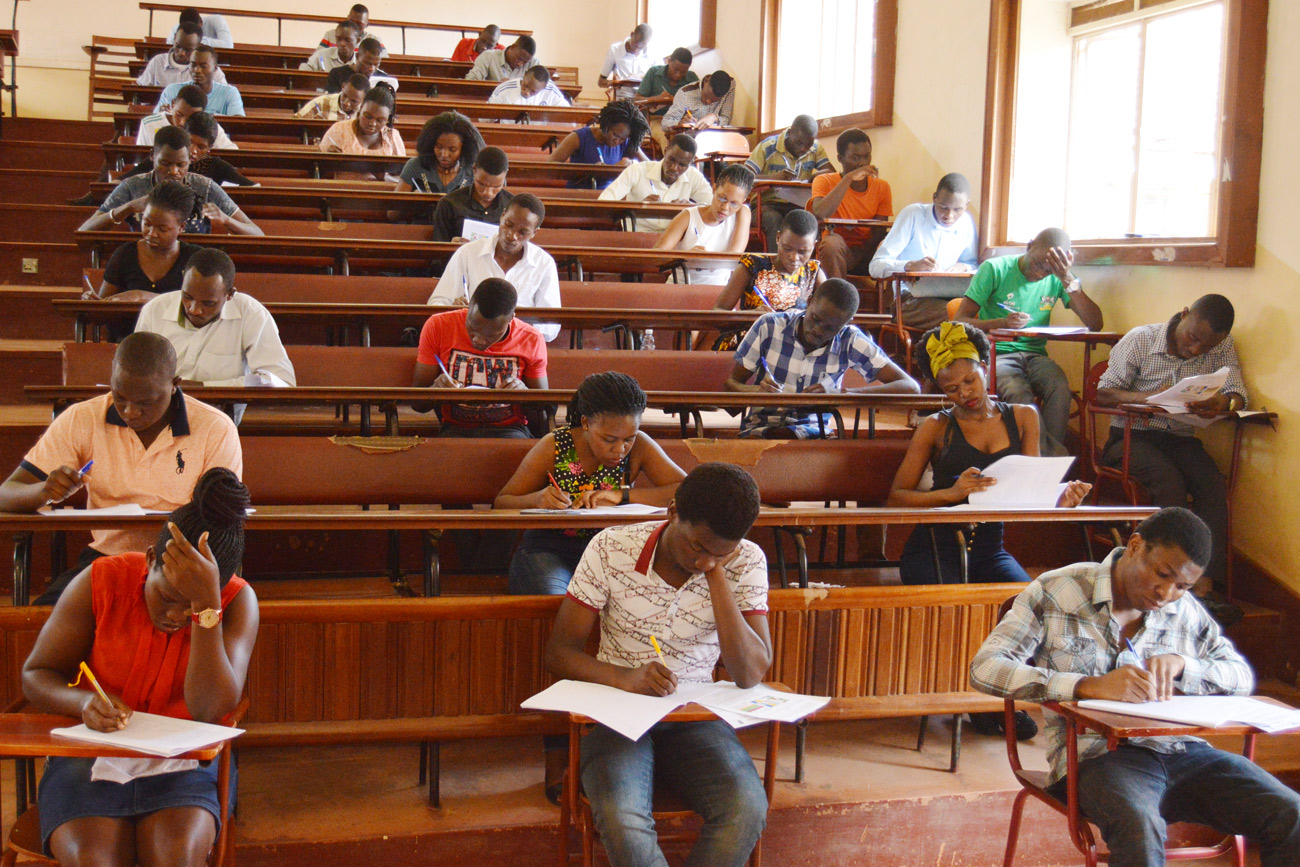
I have been on both sides of the lecture room. I have sat there as a student, tense, waiting for results that felt like they would decide everything. And later, I stood in front of the lecture room as a lecturer. What I saw from that side changed how I think about our university system.
As a young man, now turned into a teaching assistant, I saw bright, hardworking students fail just one paper and be told to repeat an entire academic year. I saw final-year students—people who had pushed through three or four tough years—miss graduation because of one exam.
While I didnt find my course difficult and I absolutely enjoyed it, I know for sure that many students struggled with it. May be it wasn’t their programme of choice. May be they had other issues I didn’t have. May be they didn’t like the teaching and assessment methods. What is for sure is that I saw students struggle both in our programme and in other courses outside our department. Retakes are a real problem at Universities.
I saw parents and guardians struggling to find money for another year, not because their children were incapable, but because the system gave them no second chance. And honestly, it disturbed- a lot. It left me asking: What exactly are we trying to achieve?
There was always something deeply frustrating—very painful—about seeing a final-year student lose a whole year of their life because of one paper. Someone who has passed nine out of ten courses is told, in simple terms, “you are not ready.” They watch their friends graduate. They pause their lives. Then they come back a year later to fix one thing. This didn’t make sense to me. Whats the magic with this one final attempt?
What is so serious, so final, about one exam that a student must get it right on the first attempt—or pay such a heavy price? One would imagine that failure is part of learning. It is a settled principle that this is how people improve. That is how growth happens. But in many of our universities, failure is treated like the end of the road instead of part of the journey. And in my opinion, that is where the problem starts.
From what I have seen, this is not just about students not working hard enough. It is about how the system is set up. In many cases, almost all the marks—sometimes even 70 to 100 percent—are tied to one final exam. Continuous assessment is either too small or not taken seriously. Feedback is limited. So everything comes down to one day, one paper, one moment. Just about 2-3 hours! If something goes wrong on that day, that is it.
But let us be honest with ourselves. What happens when 40 percent of the class fails? Or even more? Is that really a student problem? If 40 percent fail, we need to start asking questions.
If 90 percent fail, then clearly something is wrong with the system.Maybe the exam was too difficult. Maybe it was not aligned with what was taught. Maybe teaching was not effective. Maybe students were not supported enough. These are the questions we should be asking.
But too often, we do not. Results are released. Students are told they have failed. And life moves on—for everyone except them.
I have also seen other things that are difficult to ignore. Marks that delay for too long. Marks that go missing. Assessments that are too subjective, especially oral ones, where there is no record. A student can be failed, and there is nothing to refer to. And when students try to appeal, where do they go?
They keep moving from room to another and be told to check again. I had instances in my own case where some people that are supposed to take custody of those mark sheets or keep the papers lose them. And the problem sits with you, as the lecturer that handled the student exam. The student thinks the lecturer is hiding their marks. Sometimes, its true lecturers can frustrate students but sometimes, there are many weak links in the chain of the custody.
Most of the time, the students are pushed through internal systems that are slow and, in many cases, protective of the institution itself. There is no strong, independent system outside the university where a student can say, “I have been treated unfairly, can someone help me?” So students remain stuck—feeling unheard, frustrated, and powerless. Some give way to sexual exploitation.
Now, to be fair, not all students are doing their part. Some do not attend lectures. Some do not prepare well. That is true, and we should say it openly. But even with that, when failure becomes widespread, it stops being about individual effort. It becomes about the system. And systems must take responsibility for their outcomes.
The impact of this goes beyond the classroom. When even 10 percent of students are forced to repeat a year, the cost is huge. Families pay more money. Universities use more resources. Graduates delay to enter the job market. Opportunities are lost.
For final-year students, it is even worse. They lose jobs. They lose momentum. They lose confidence. All because there was no second chance within a reasonable time. In my view, that is not academic rigor. That is inefficiency. And in some cases, it is unfair.
If you look at how universities are operating in many parts of the world today, things are different. Students are assessed over time, not just at the end. If someone fails, they are given a chance to retake within the same academic year. Final-year students are supported to complete, not pushed out. And when many students fail, institutions take a step back and ask, “where did we go wrong?” That is the mindset we need.
I recall when I was doing my post-graduate, we even had a chance to enter an exam, look at the paper and determine if we want to sit it at that point, or wait for a second but last attempt, in that final year. Imagine being given an exam paper, you are given 10 minutes to study it, if you feel you are not prepared and prefer another exam- another set, which is risky but atleast gives you an alternative, you are free to move out of the paper and wait for that second set. The professors were so concerned and involved in our lives that failure felt like it was theirs. You felt supported. They wanted you to learn and the assessment wasnt some way of ‘catching you’ but ensuring you were growing. You were prepared.
I am not making a case for lowering standards. Nope! This is not about lowering standards. It is about improving them. Because a system that fails large numbers of students without asking questions is not strong—it is weak.
We need to rethink how we assess. Students should be allowed to retake exams within the same semester or at least within the same academic year. No one should repeat a full year because of one paper. Assessment should be continuous, not concentrated in one final exam.
We also need transparency. More than one examiner where possible. Systems must track marks properly with records for oral assessments. No student should suffer because a mark disappeared or because someone decided unfairly.
And importantly, we need independent review systems. Places where students can go when they feel the system has failed them. Not internal committees that protect the institution, but bodies that can look at issues fairly and act quickly.
Because right now, too many students are not just failing exams—they are being failed by the system.Having experienced this as both a student and a lecturer, I do not believe the problem is that our students are incapable. The problem is that our systems have not evolved.
We are still holding onto old ways of doing things—systems that were designed to filter people out, not to support them to succeed. But the world has changed. Education must change with it.
Universities are not meant to be places where people come to be eliminated. They are meant to be places where people grow, learn, and become better.
And when we block that growth with rigid rules, with lack of accountability, and with systems that do not support students, we are not just failing them—we are failing ourselves. The question is not whether change is needed. The question is: how long will we take to act?
I have never understood why a final year student can not be given an opportunity within the same semester to resit an exam? I also dont understand the logic of final year students marks being displayed much later? These should be prioritised to ensure that students that need to get a resit are given opportunity.
Why do we not act on some of these very simple things? Who told us that these rules are cast in stone and can not adapt to the current context? University managements, please reform these rules. Students and their parents deserve better. We need to be more accountable and supportive.


The system must evolve…this is an important message. Thank you Henry