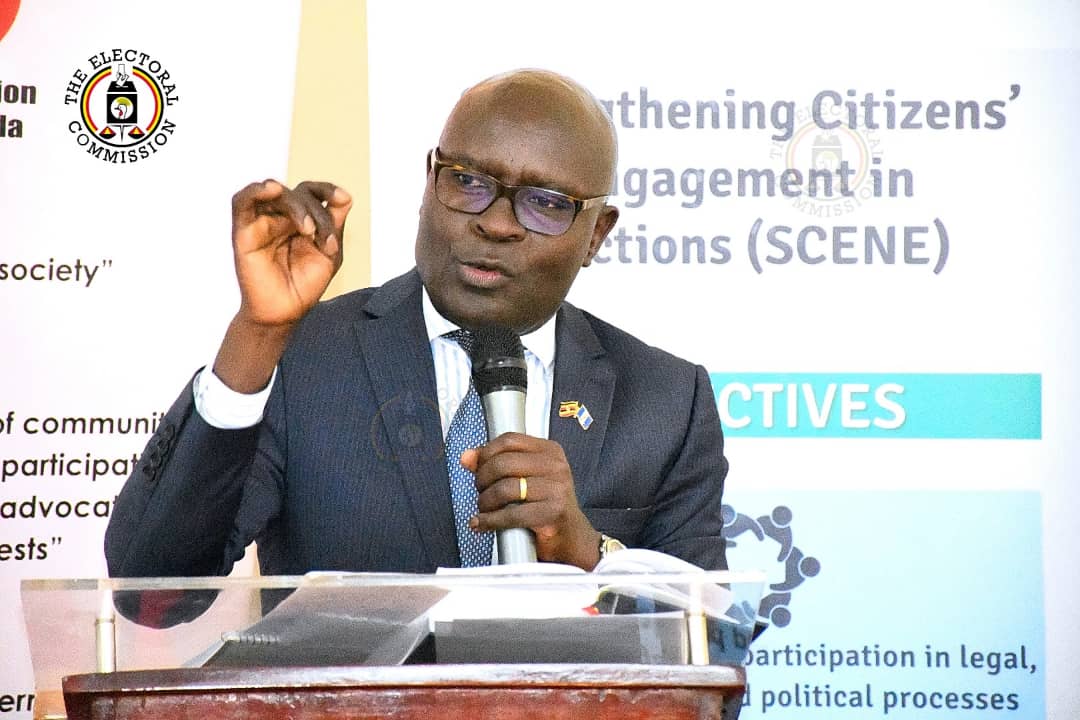
Electoral Commission (EC) chairperson, Justice Simon Byabakama Mugenyi, has defended the Commission’s capacity to deliver a credible election, urging critics to provide concrete evidence of bias instead of making sweeping accusations.
Speaking at a national workshop on Special Interest Groups (SIGs) elections in Kampala on Wednesday, Byabakama dismissed long-standing claims—mostly from opposition parties—that the EC lacks independence and fairness.
“The business of saying that as long as you are appointed by someone, you cannot conduct a free and fair election… the law says he who asserts must prove,” Byabakama stated. “You show us evidence; but when you talk generally without specifics, then I also cannot give you clear answers.”
The opposition, particularly the National Unity Platform (NUP) led by Robert Kyagulanyi (Bobi Wine), has consistently questioned the Commission’s neutrality. In 2023, Kyagulanyi criticized President Museveni’s reappointment of Byabakama to a fresh seven-year term, saying it signaled that the government had no intention of holding free and fair elections.
Byabakama, however, insisted that the EC applies the law equally to all candidates, including the incumbent president.
“The law says all candidates are treated equally, and we do that,” he explained. “Because he is the incumbent, it doesn’t mean he is absolved from nominations, collecting signatures, paying nomination fees, or presenting academic qualifications.”
Referencing the chaotic Kawempe North by-election in March 2025, Byabakama blamed the disorder on some political actors rather than the Commission.
“We delivered voting materials. But some of you decided to destroy them. Was that our fault?” he asked.
The upcoming SIGs elections, which cover youth, older persons, persons with disabilities (PWDs), workers, and the Uganda People’s Defence Forces (UPDF), are scheduled for June 17–19, 2025. These will mark the beginning of the 2025/2026 General Elections cycle.
Diana Kateeba, the EC’s head of field operations, used the workshop to clarify eligibility requirements. Youth candidates must be between 18 and 30 years old, while elderly candidates must be over 60, with dates verified through the national voter register.
Concerns were also raised about impostors posing as persons with disabilities to secure PWD seats. The EC emphasized that only recognized categories—such as cerebral palsy, deafness, blindness, mental disabilities, albinism, and multiple disabilities—qualify for consideration.
Justice Byabakama concluded with a cautionary note:
“To achieve credible elections, every stakeholder must play their part, not just the Commission.”